Annual Retreat and 10-Year Strategic Planning Meeting

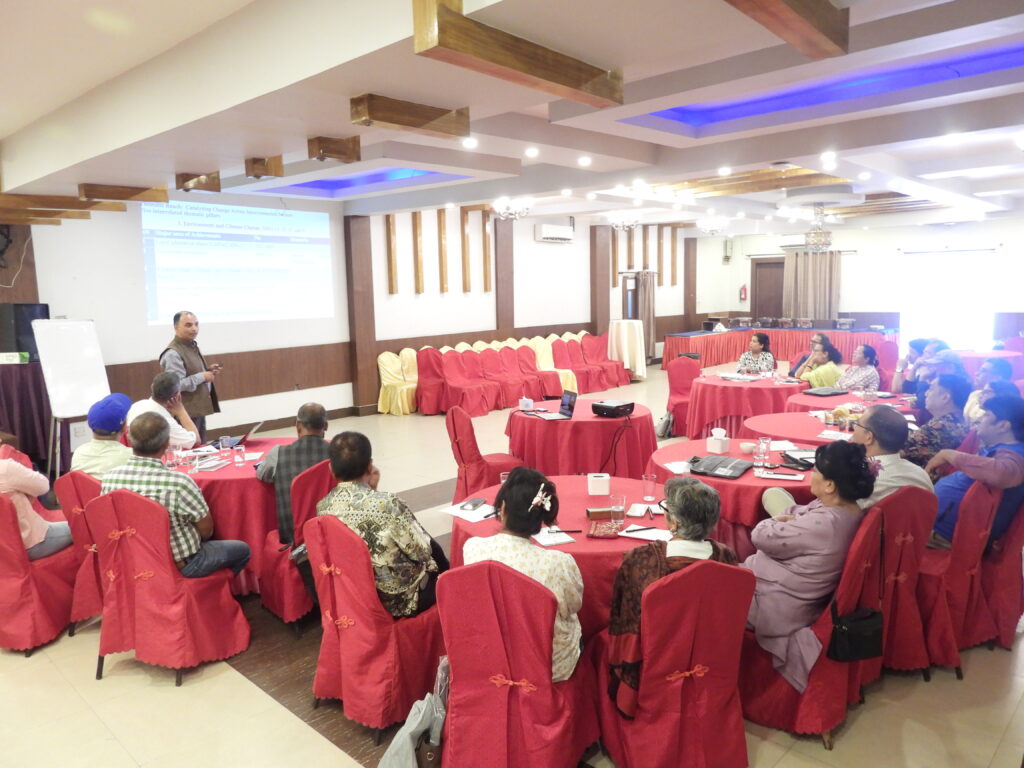
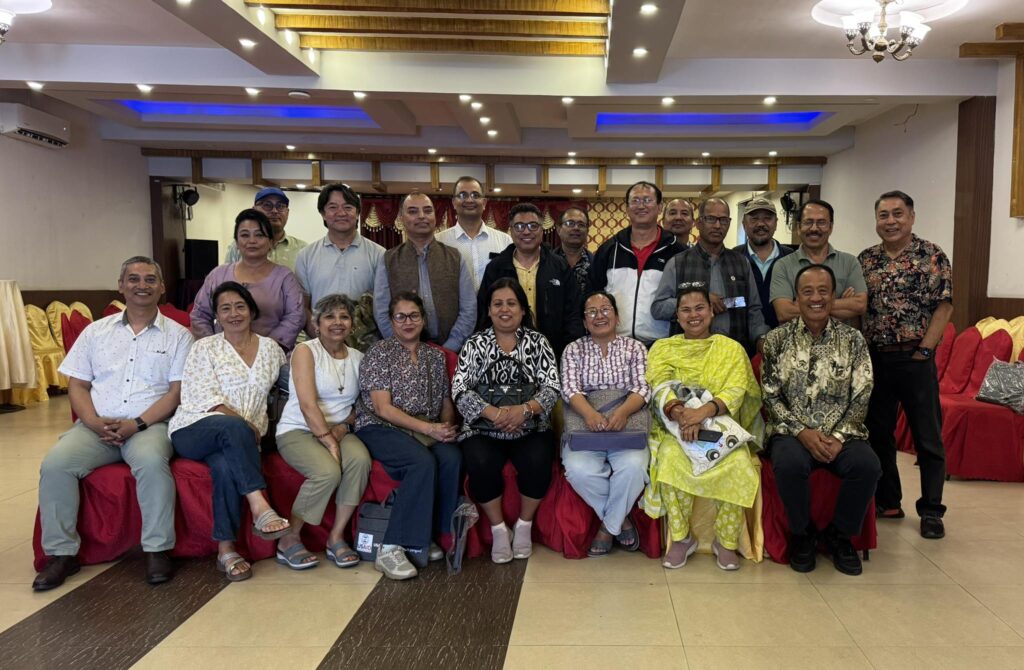
We, Rupantaran Nepal (RN) successfully organized its Annual Retreat and 10-Year Strategic Planning Meeting on 15 June 2025 at Hotel Siddhartha Cottage, Tinkune, Kathmandu. The event brought together 24 participants, including RN members, former presidents, and core staff, fostering a collaborative atmosphere for reflection and future planning. The program commenced with a comprehensive presentation on RN’s organizational and programmatic progress, highlighting key achievements, lessons learned, and ongoing challenges. This was followed by an open and engaging discussion, offering participants the opportunity to reflect on past experiences and collectively shape the organization’s future trajectory.

A draft of RN’s 10-Year Strategic Plan was also presented during the session. The RN members engaged in thoughtful deliberation to refine the organization’s vision, mission, strategic priorities, and areas of intervention, laying a strong foundation for RN’s long-term direction and impact.

Initiative for Climate Change Adaptation (ICCA)

Rupantaran Nepal in consortium with partners International Development Enterprise (Prime) and Resource Identification and Management Society (RIMS) Nepal is implementing USAID funded five year project entitled “Initiative for Climate Change Adaptation (ICCA)”. The project utilizes experience and learning from past initiatives of the partners and works with communities to develop interventions that improve the ability of individuals and groups for adapting to climate change.

Rupantaran is responsible for technical support in capacity building, social inclusion, governance and coordination for climate change adaptation in forestry sector. In addition, it is implementing the ICCA in 6 districts (Rupandehi, Kapilvastu, Kaski, Dang, Parbat and Nawalparasi districts) out of 8 districts (including Syangja and Rolpa) in western and mid-west development region of Nepal.

The overall goal of the project is to increase resilience of poor and vulnerable communities to adapt to and mitigate the adverse impacts of climate change in Nepal.

Objectives

  • To strengthen institutions and mechanisms to facilitate effective governance for climate change adaptation, resource mobilization and mainstreaming development planning linking forestry and agricultural development initiatives
  • To enhance communities’ capacities to respond to the adverse impacts of climate change and harness opportunities
  • To diversify and improve livelihood and resilience of poor and vulnerable communities through sustainable income generation, skills and enterprise development
  • To identify and facilitate suitable adaptation interventions, innovations and technologies.

Project outputs

  • Climate change adaptation mainstreamed into existing institutions with functional institutional mechanism and good governance on climate change
  • Communities’ knowledge and capacities enhanced with minimum climate change impacts on their livelihoods.
  • Sustainable income generation and enterprise options increased thereby improving the livelihoodof poor and vulnerable communities
  • Adaptation practices/innovations/technologies promoted and adopted initially in project model pockets and then extended GON and other climate adaptation programs.

The target population of the project includes smallholders, poor and vulnerable households and communities that include women, children, and ethnic groups living in fragile and vulnerable areas of Nepal suffering from climate change impacts, acute food shortage and poverty.  The project will directly benefit 20,000 HHs (over 100,000 individuals), of which 10,000 HHs will be involved in smallholder enterprises generating an average incremental income of US $100 per annum.  It is expected to involve 50% women and 50% disadvantaged castes/ethnic groups among the beneficiaries.

Prepare Enhanced Local Adaptation Plans for
Action (LAPA)

Rupantaran Nepal prepared Enhanced Local Adaptation Plans for Action (LAPA) for Adaptation for
Smallholder of Hilly Areas (ASHA) programme funded by IFAD and implemented by Ministry of Forest
and Environment (MOFE) from January, 2016 to July, 2018. The assignment was located in Salyan
District of Karnali Province of Nepal.


The main aim of this assignment was to prepare Local Adaptation Plan for Actions (LAPAs) by applying
GIS–based sub watershed management approach and the participatory scenario development (PSD) tool
in line with National LAPA framework. Specifically

 To raise awareness of communities and stakeholders on climate change, its impacts and initiations
undertaken at local, national and international level.
 To assess demographic, socio-economic gender relations and trends.
 To carryout vulnerability and adaptation assessment and prioritize adaptation options in targeted
Wards of project districts.
 To ensure concerns and issues identified by the sub-watershed based planning are addressed during
LAPA preparation
 To document Enhanced LAPAs of targeted Wards ensuring the alignment of LAPA with the NAPA
and ASHA’s Enhance LAPA manual
 To coordinate with stakeholders in an effective and participatory manner especially with the PCU,
DPCU and local level concerned line agencies
 To harness lesson learned and recommend to implement the same types of the assignment for
scaling up the enhanced approach in future

The assignment activities were successfully completed with extension of the 6 months. It is due to
restructure of the state and the local elections which hinder the smooth work in the field. Primarily,
Rupantaran Nepal has oriented to the consultant team proposed in this assignment and followed by the
district inception meeting with SHs at Centre and workshop in Salyan. After district level inception, a
series of sensitization and vulnerability assessments were undertaken (1/2 day orientation at ward level, 2
days workshops at settlement level and 3 days LAPA formulation workshop at ward level) and total 8466
persons were sensitized and attended in these workshop. Through these workshop and discussion 27
enhanced LAPAs of the 27 wards were prepared and these LAPAs were consolidated in the 3 LGs level
LAPA. The entire LAPA preparation process was guided by the enhanced LAPA manual and National
Framework of LAPA. In the process, comprehensive vulnerability and capacity assessment was done.
Finally, all developed LAPAs were endorsed through LG mechanism and submitted to ASHA-PCU. Under
this assignment, RN prepared inception reports, LAPAs and project completion report including lesson
learned and recommendation and financial statement were prepared and submitted.